
Pre-K Classroom
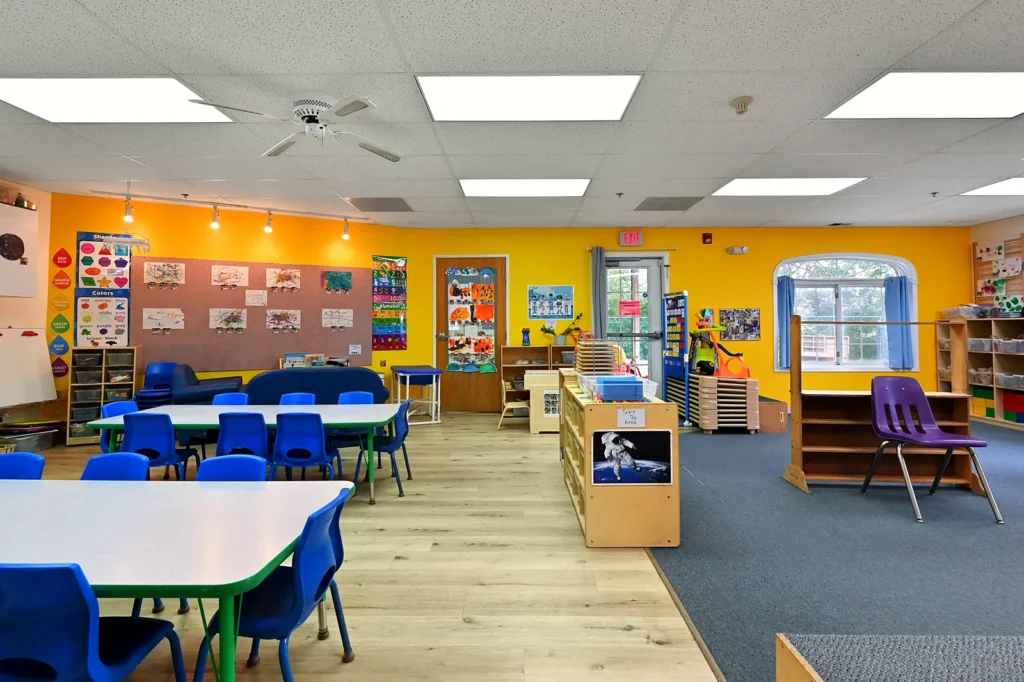
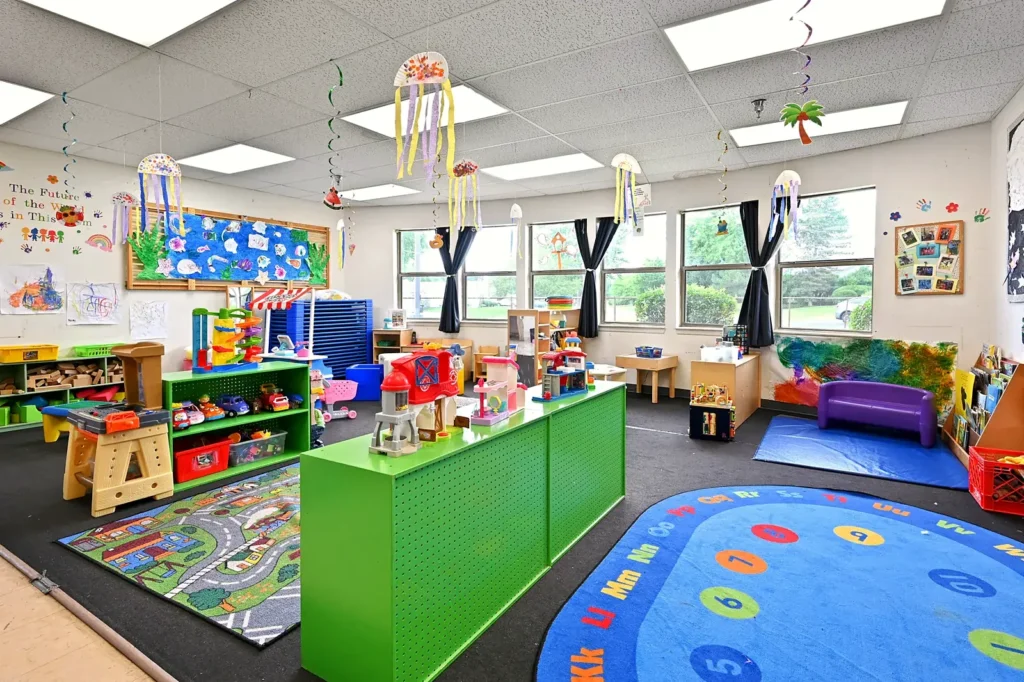
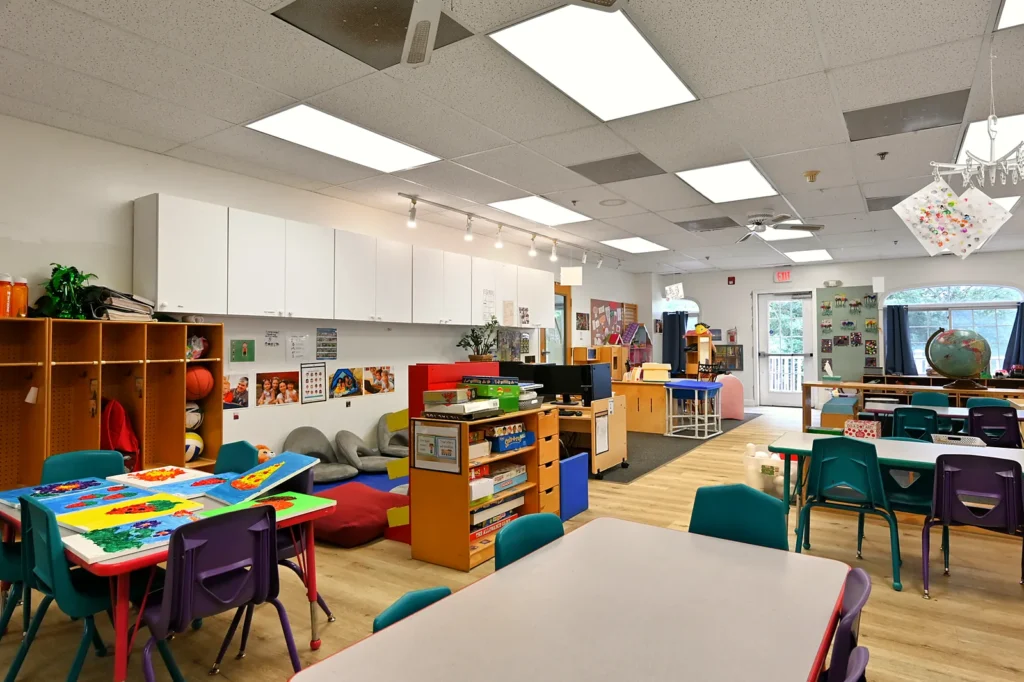
Preschool and Pre-K classrooms organized into learning centers that prepare children for kindergarten.
Pre-K Classroom (2.5 – 5 years)
Our Pre-K classrooms prepare children for kindergarten through project-based investigations. In studies such as “Trees” or “Buildings”, children ask questions, investigate, draw, count, build and talk about what they find: the same thinking skills they will use in school.
What children learn
- Early literacy: letter recognition, early writing and a love of books.
- Math: number sense, counting, patterns and comparing.
- Science and social studies: nature, our community and the world around them.
- Social-emotional skills: emotional regulation, empathy and cooperative learning.
- Fine motor skills: drawing, cutting and using writing tools.
The daily schedule
Each day mixes large-group and small-group time, independent play in learning centers, outdoor time, meals, quiet rest and reflection.
Tracking progress
Teachers observe and assess each child with Teaching Strategies, use what they see to plan individual next steps, and meet with families at formal conferences at least twice a year.
Wondering if your child is ready? Is your child ready for pre-K? walks through the signs at each age.
Frequently Asked Questions
Q1: How does your program prepare children for kindergarten?
Our Pre-K program builds foundational literacy, math, science, and social skills through project-based studies, hands-on learning, and structured group time.
Q2: What kind of schedule do Pre-K children follow?
Each day includes large and small group activities, independent play, center exploration, outdoor time, meals, and quiet rest.
Q3: What will my child learn in Pre-K?
Children explore early reading and writing, math concepts, science and nature, social studies, art, and social-emotional development.
Q4: How do teachers assess my child’s progress?
We use Teaching Strategies to observe and assess developmental progress in real time. These observations guide individualized planning.
Q5: How do you support social-emotional development?
Teachers use intentional modeling, feeling charts, group discussions, and problem-solving to help children build empathy, confidence, and self-regulation.
Q6: Do you offer parent-teacher conferences?
Yes, we hold formal conferences at least twice a year and encourage regular communication to discuss your child’s growth and goals.
Next steps for your family
Get ready for kindergarten, explore language learning, or visit a center.